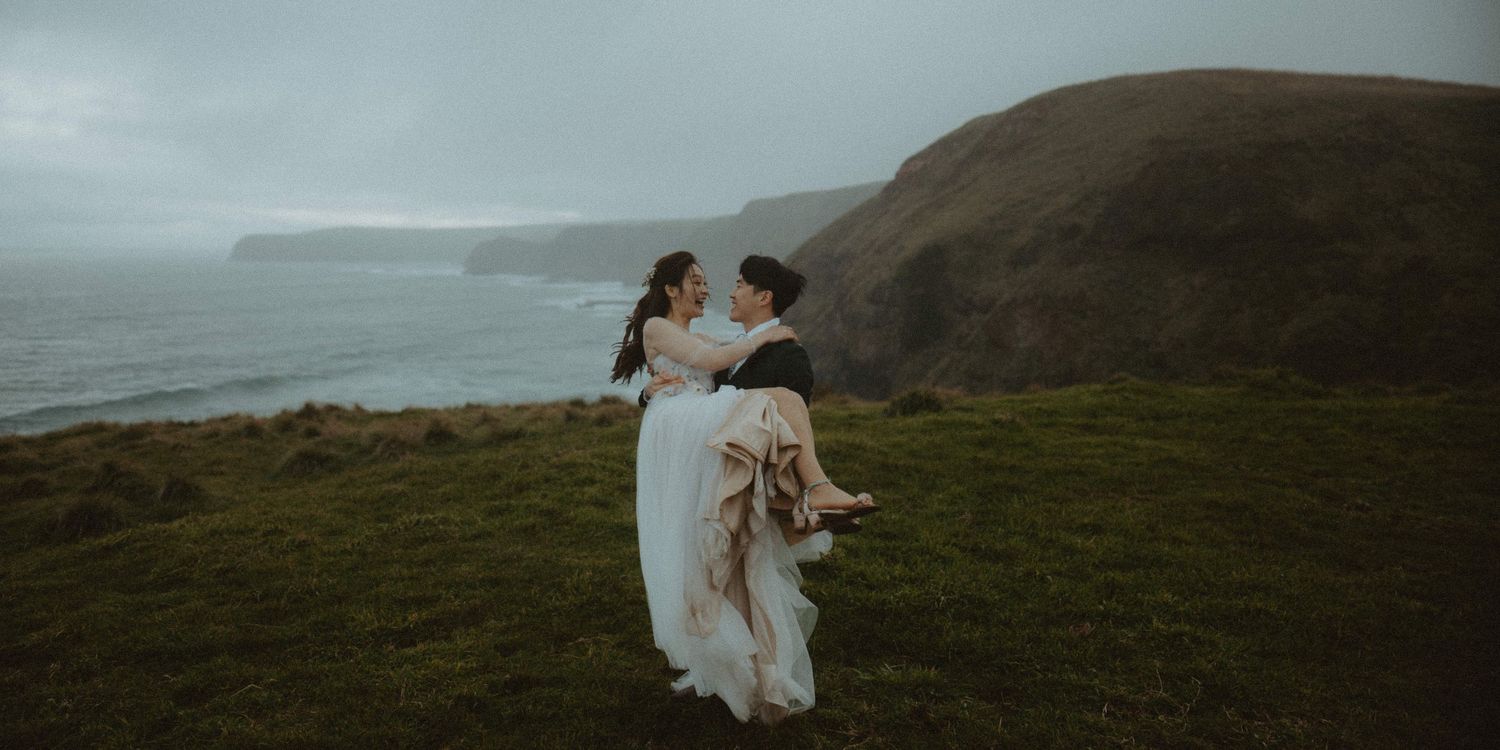
Elopements aren't really new anymore. They're certainly a lot more common than they were when I first started photographing them, particularly in places like the US and Europe. But here in Australia, they're still pretty uncommon.
I think geography has a lot to do with that. In Europe, you can jump on a relatively cheap flight and suddenly you're in another country surrounded by completely different landscapes. Australia is enormous, and we're a long way from most of the world. Going somewhere genuinely different can very quickly become an expensive exercise.
Because elopements are still uncommon here, I find couples often approach planning one as though they're simply organising a traditional wedding, only smaller. They take all the things they know about weddings, remove 90% of the guests and assume that's an elopement.
Before we get into anything else, though, there's one thing I think you need to work out first. Do you actually want to elope?
If you're considering an elopement purely because weddings have become too expensive or stressful, I'd stop and think about that. Yes, you will probably save money by eloping, but if you've always dreamed about Dad walking you down the aisle, your grandparents watching you get married, speeches from your best friends and dancing terribly with 100 people until midnight, removing those things because they're expensive doesn't necessarily give you your dream elopement. It might just give you a cheaper version of the wedding you actually wanted.
Choose an elopement because you genuinely want the experience of eloping. Once you've figured that part out, these are the things I'd want you to know before you start planning it.
You can have guests and still keep traditions
One of the biggest misconceptions about eloping is that you're somehow prohibited from doing anything that resembles a traditional wedding. Couples ask whether their parents can come, whether Dad can walk them down the aisle, whether they can get ready separately or have a first dance.
Of course you can. An elopement isn't about deliberately removing every wedding tradition. It's about having the freedom to keep the things that actually mean something to you and get rid of the things that don't.
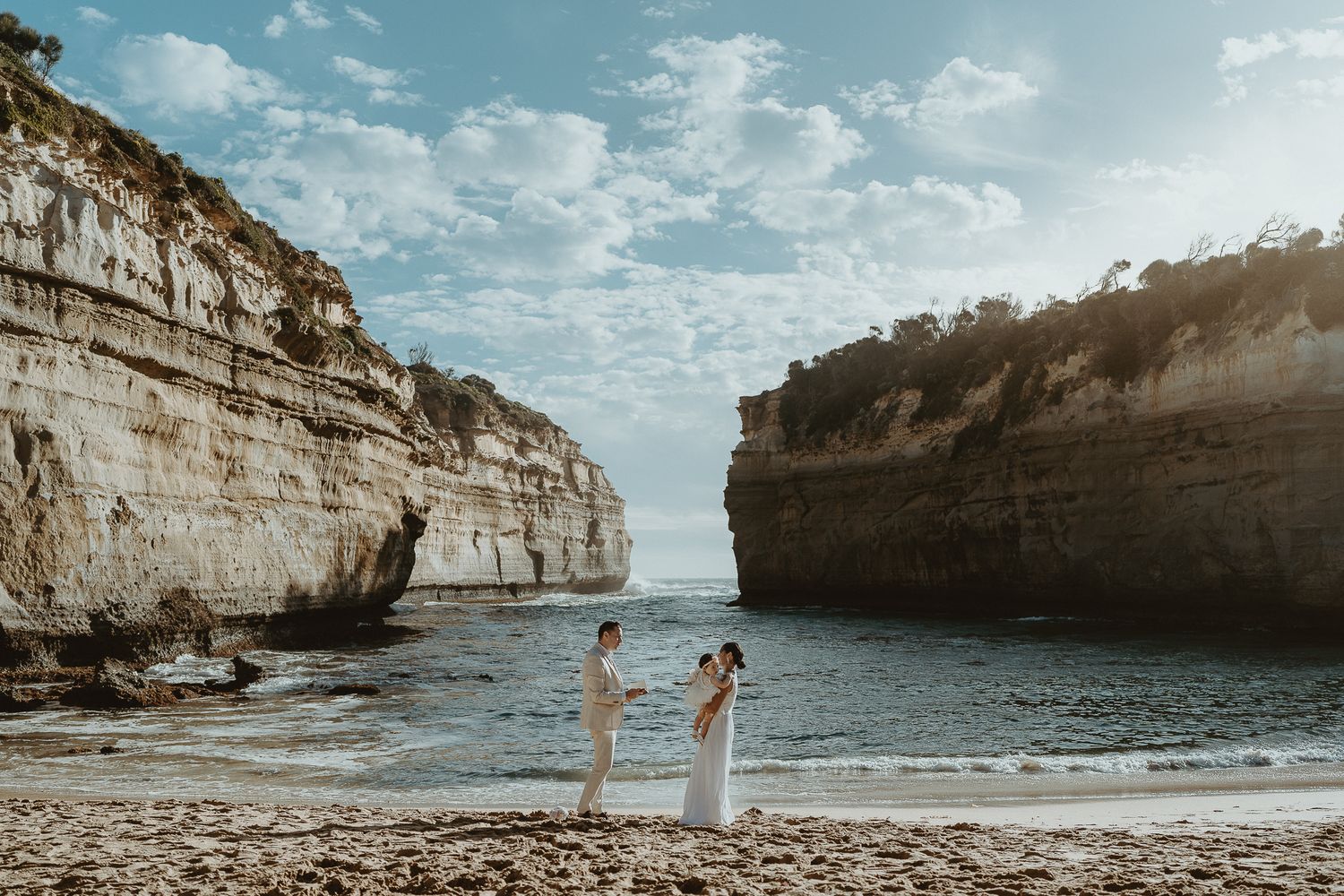
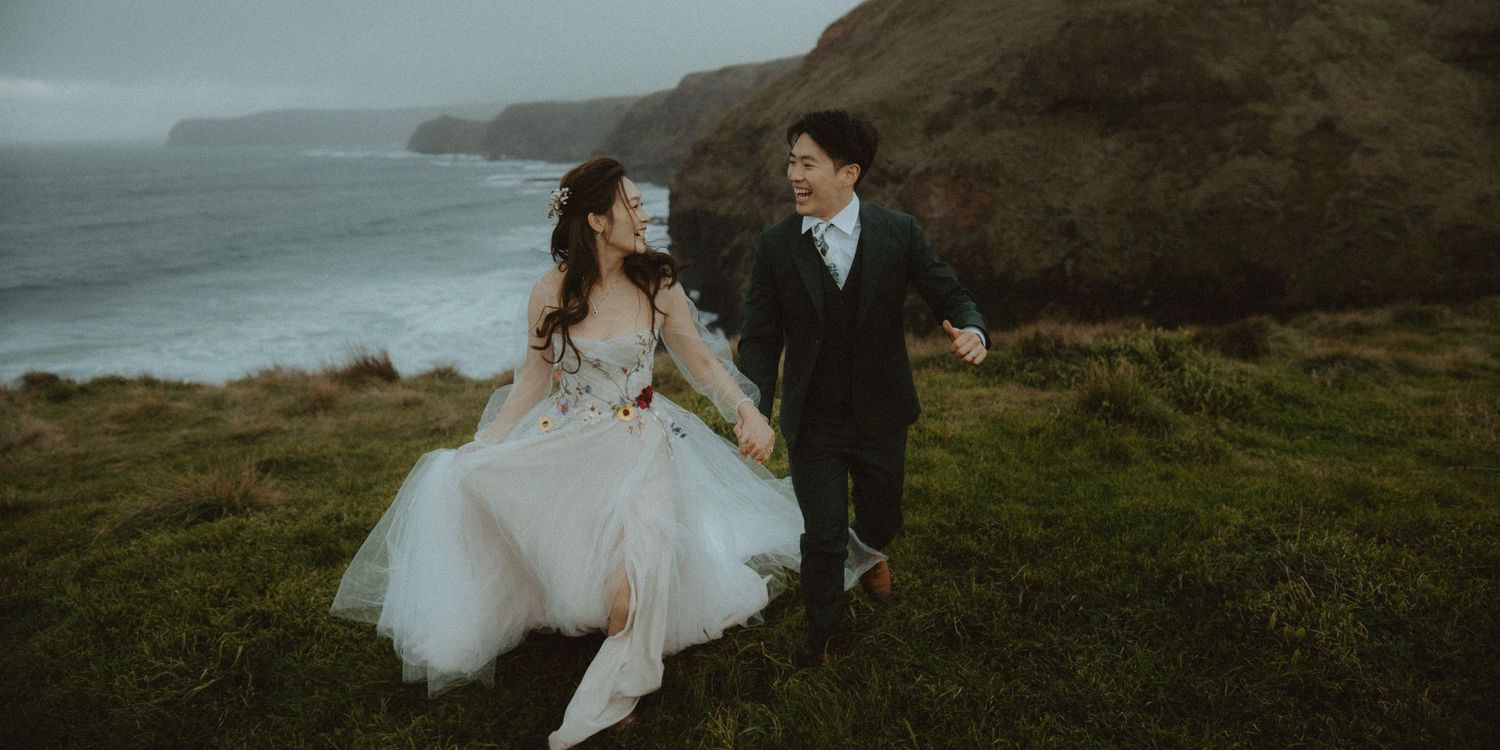
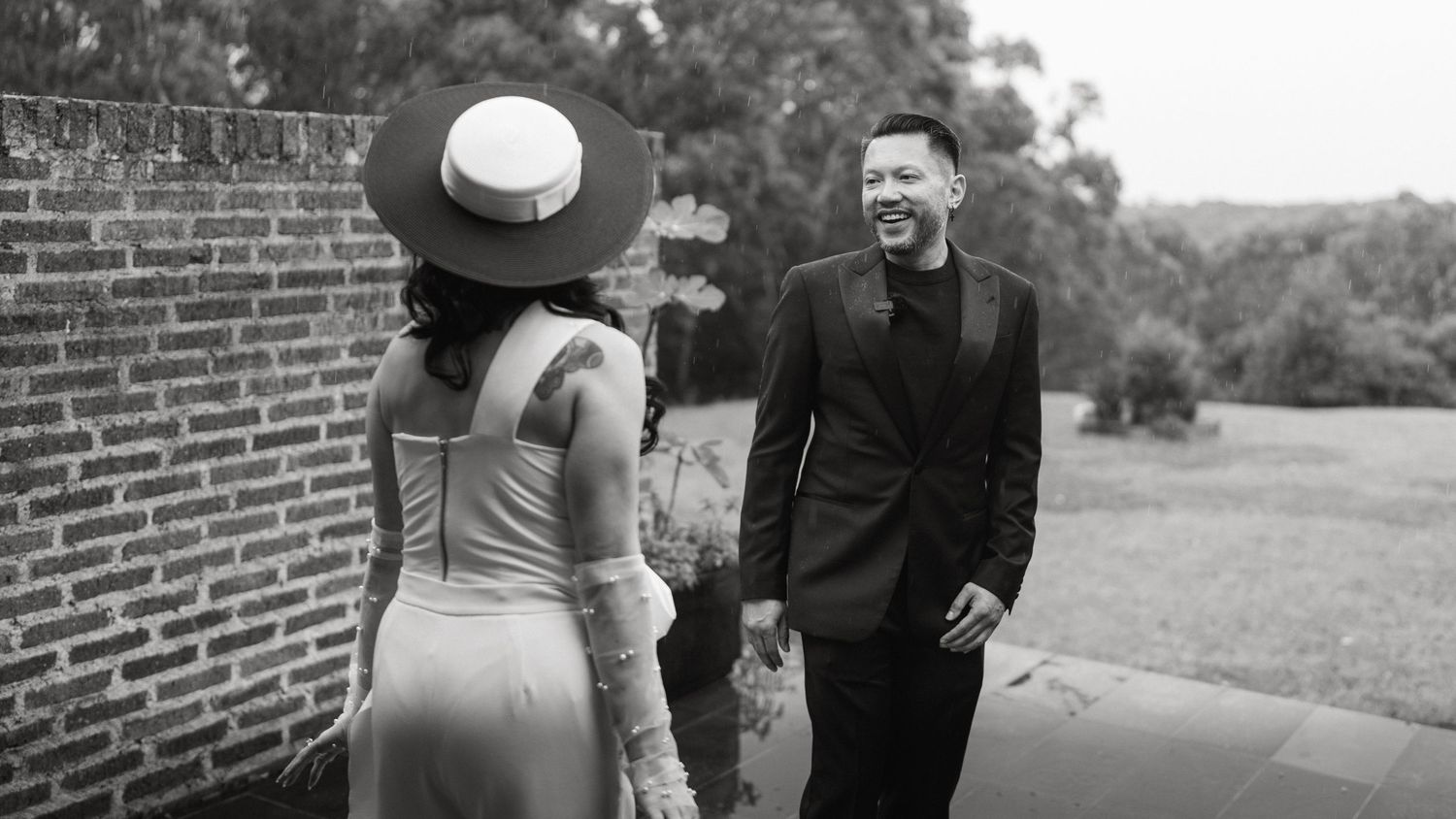
When I photographed Rel and Kosty's elopement on the Great Ocean Road, they hired a huge property in the middle of nowhere and got ready on opposite sides of the house. They could easily have spent the whole morning together, but they chose not to see each other until they were ready and then had a first look. They still got that emotional moment of seeing the person they were about to marry for the first time.
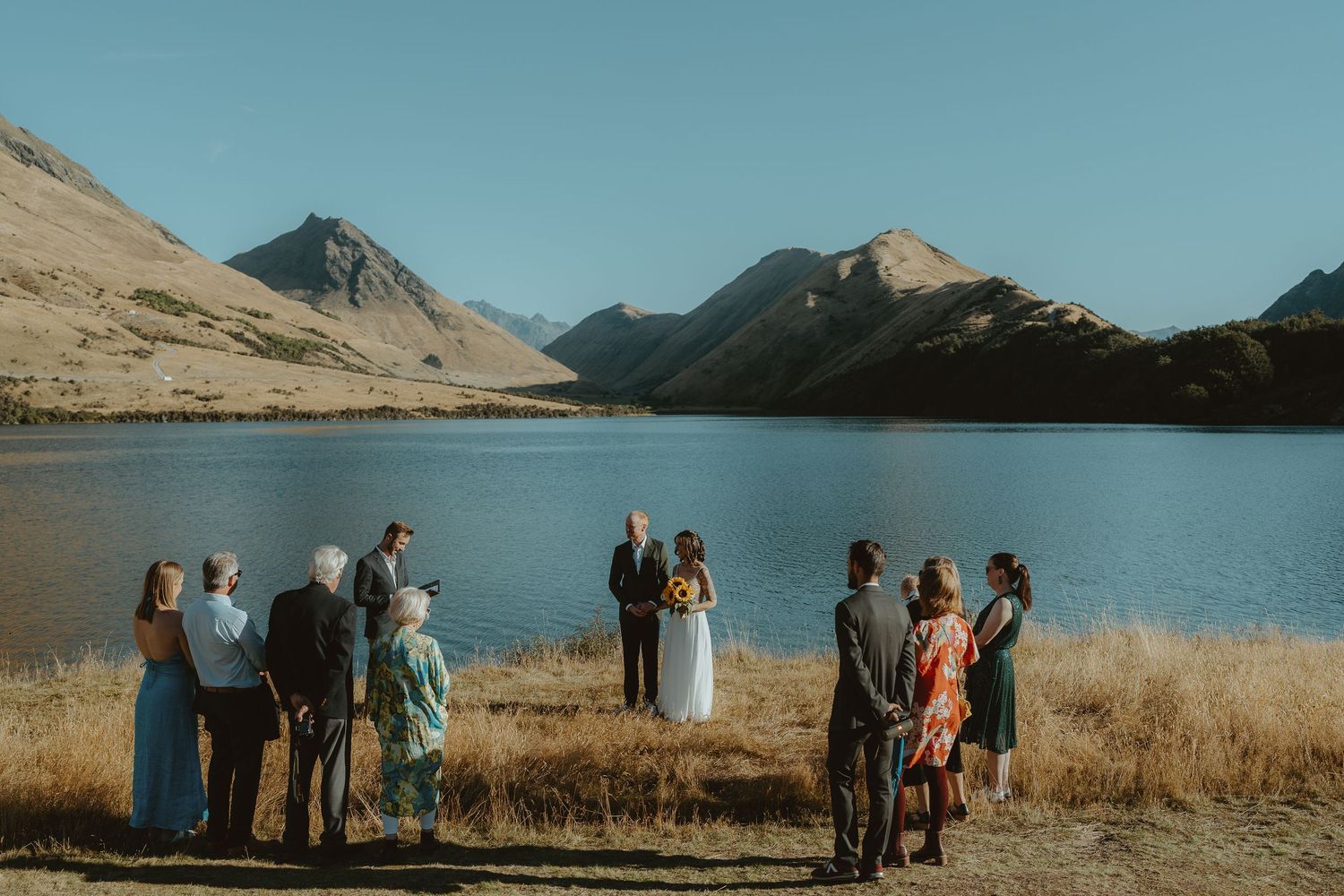
Fernanda and Andrew travelled from Australia to elope in New Zealand and had around 10 or 12 people with them. Fernanda's dad still walked her towards the ceremony. She got that moment beside her dad, kissed him goodbye, let go of his arm and continued towards Andrew.
As for how many guests you're allowed to have, I generally think of an elopement as having fewer than about 10, but that's definitely not a hard and fast rule. Nine guests doesn't make something an elopement while eleven magically transforms it into a wedding. How you're approaching the day, where your priorities lie and the kind of experience you're creating matter far more than an arbitrary number.
If having Mum and Dad there matters to you, invite them. If your sister is your best friend and you can't imagine getting married without her, invite her. Keep the traditions and people that matter to you, and forget about the ones that don't.
Your elopement should feel like yours
This is probably one of my favourite things about elopements. You don't have to fill a conventional wedding timeline with all the things you're apparently supposed to do. You have a ridiculous amount of freedom to build the day around things you actually enjoy.
When Hannah and Kyle eloped in Queenstown, they brought four friends with them and organised customised outfits for everyone because they love mini golf. Hannah and Kyle played a round in their wedding clothes with their friends before the ceremony, and later they went and got matching tattoos.
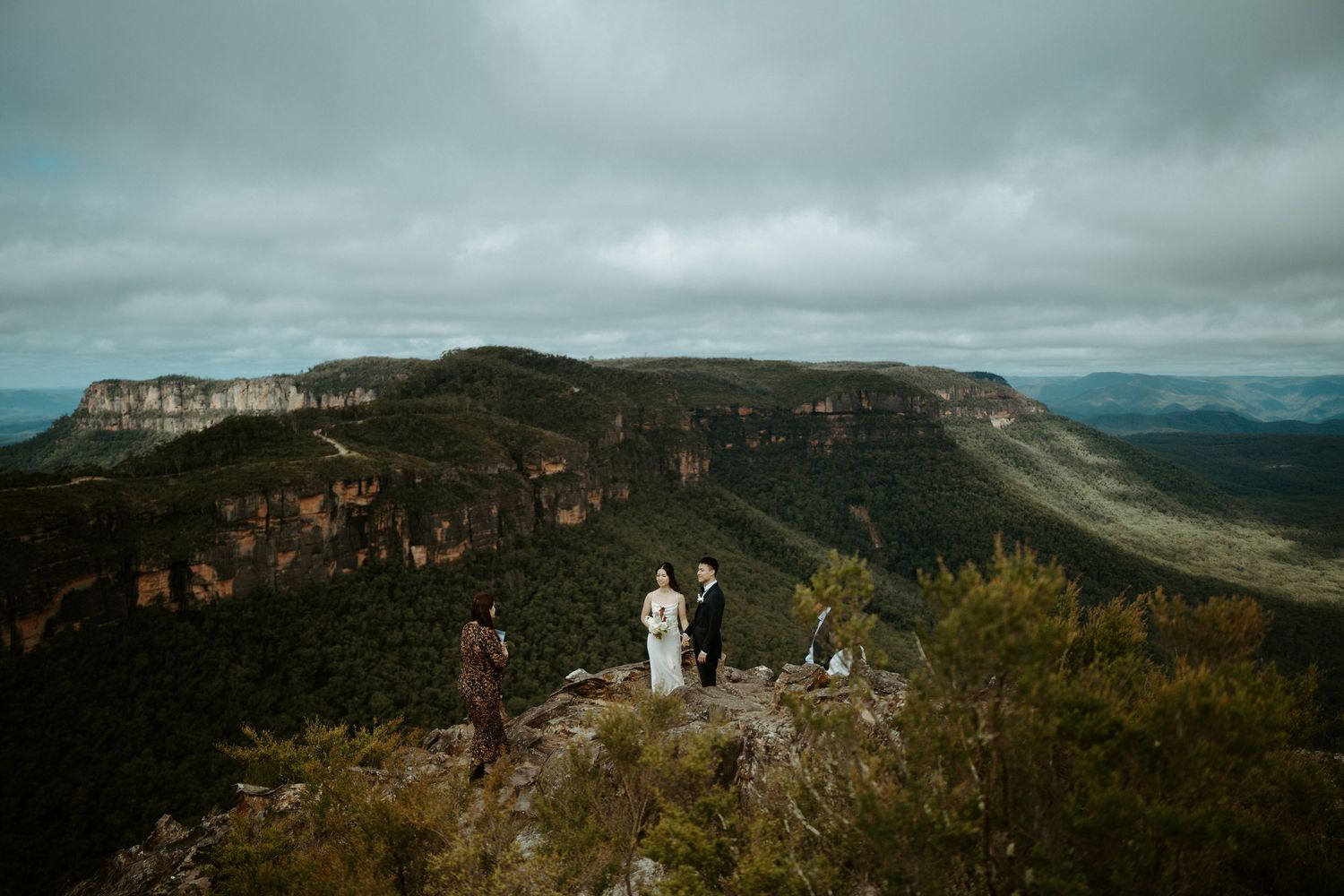
I've had couples hike and rock climb in the Blue Mountains. Jarrad and Steph were also eloping in Queenstown, and at about 6:30am in the middle of winter we went down to the waterfront, grabbed hot pies, coffee and some bakery food and sat beside the water having breakfast because trying the pies was something they were excited about.
None of those things were done because somebody searched Pinterest for "things to do at an elopement". They did them because they actually enjoyed them.
That's where I'd start. Don't fill your elopement with things that look adventurous on somebody else's Instagram. Think about what the two of you genuinely enjoy doing together and build from there.
Eloping will save you money, but be smart
I used to talk about eloping as a way to save money much more than I do now. These days, I think there's an important distinction to make. An elopement will usually cost considerably less than a traditional wedding, but saving money shouldn't be the reason you choose one.
If you genuinely want to elope, then yes, one of the benefits is that you're probably not paying for a reception venue, catering for 100 people, huge stationery orders and a pile of other things that simply aren't relevant to your day.
One expense people don't always consider, though, is travel. Elopements often happen somewhere vendors don't actually live. If you need 10 different vendors and they're each charging you $400 to travel to your location, you've suddenly spent another $4,000 just getting everyone there.
That's where it can make sense to find great vendors who offer more than one service. Maybe your photographer also offers video. Maybe your hair stylist also does makeup. You're not choosing somebody purely because they're cheaper, you're simply avoiding paying unnecessary travel costs five times over.
Your core team is usually pretty small anyway. For most elopements you're looking at a celebrant or minister, photographer, hair and makeup, florist and, in my opinion, some form of video. Spend your money on the people and things that genuinely contribute to the experience you want.
your elopement is just as special as a wedding
I think we're conditioned to connect price with value. A cheaper car isn't as valuable as an expensive one. A house in one suburb isn't worth what the same house might be worth overlooking Bondi. Because an elopement generally costs less than a traditional wedding, people can subconsciously start treating it the same way.
You'll even hear people say, "It's only an elopement." It isn't. It's your wedding. It's the day you say your vows to each other and, for people of faith, make those vows before God. It's the day you become officially a family. Having fewer people standing around you doesn't make any of that less significant.
Think about it this way. If you have 100 guests, is your wedding special? Of course it is. What if you have 50? What about 30? Twenty? Ten? At what exact number does somebody announce that your wedding is no longer important? That sounds ridiculous because it is. The amount of money you spend and the number of chairs at your ceremony have nothing to do with how important the day is.
Part of treating your elopement like a real wedding is also protecting the things that made you choose one in the first place. I've watched a couple start planning a genuine two-person elopement, then invite their parents because they were upset, then siblings, then aunties and uncles. Before long, their two-person elopement had around 30 guests.
Suddenly our original ceremony location didn't work. Portrait plans had to change. They probably needed a venue. Thirty people needed food, so catering entered the conversation. The budget changed and the timeline changed. Almost everything they'd originally been excited about was disappearing one compromise at a time.
There's absolutely nothing wrong with changing your mind and deciding you'd prefer a wedding. But there's a massive difference between choosing a wedding and slowly having your elopement turned into one because you're scared of disappointing everyone else.
Listen to the people you love, but make your own decision.
Get video, even if you don't want a huge production
I'm a photographer telling you this, but get some form of video. I didn't get a wedding video when I married Daniela, and eight and a half years later I still regret it. That doesn't mean I think everyone needs to spend $7,000 or $8,000 on a massive cinematic production with interviews, full ceremony coverage and every possible bell and whistle. If you want that, absolutely go for it, but most couples eloping don't necessarily need all of that.
What I do think you should have is something that lets you hear and see the day again. This matters even more with an elopement because most of the people you love probably weren't actually there.
I've had couples send their films to grandparents who couldn't attend and then message me afterwards saying Grandma cried watching it, thought her granddaughter looked beautiful and loved seeing the adventure they'd had. That's something photographs can't quite replicate.
Photos show people what your elopement looked like. Video gives them a little glimpse of what it felt like, and years from now it gives you the chance to experience some of it again too.
You can elope almost anywhere
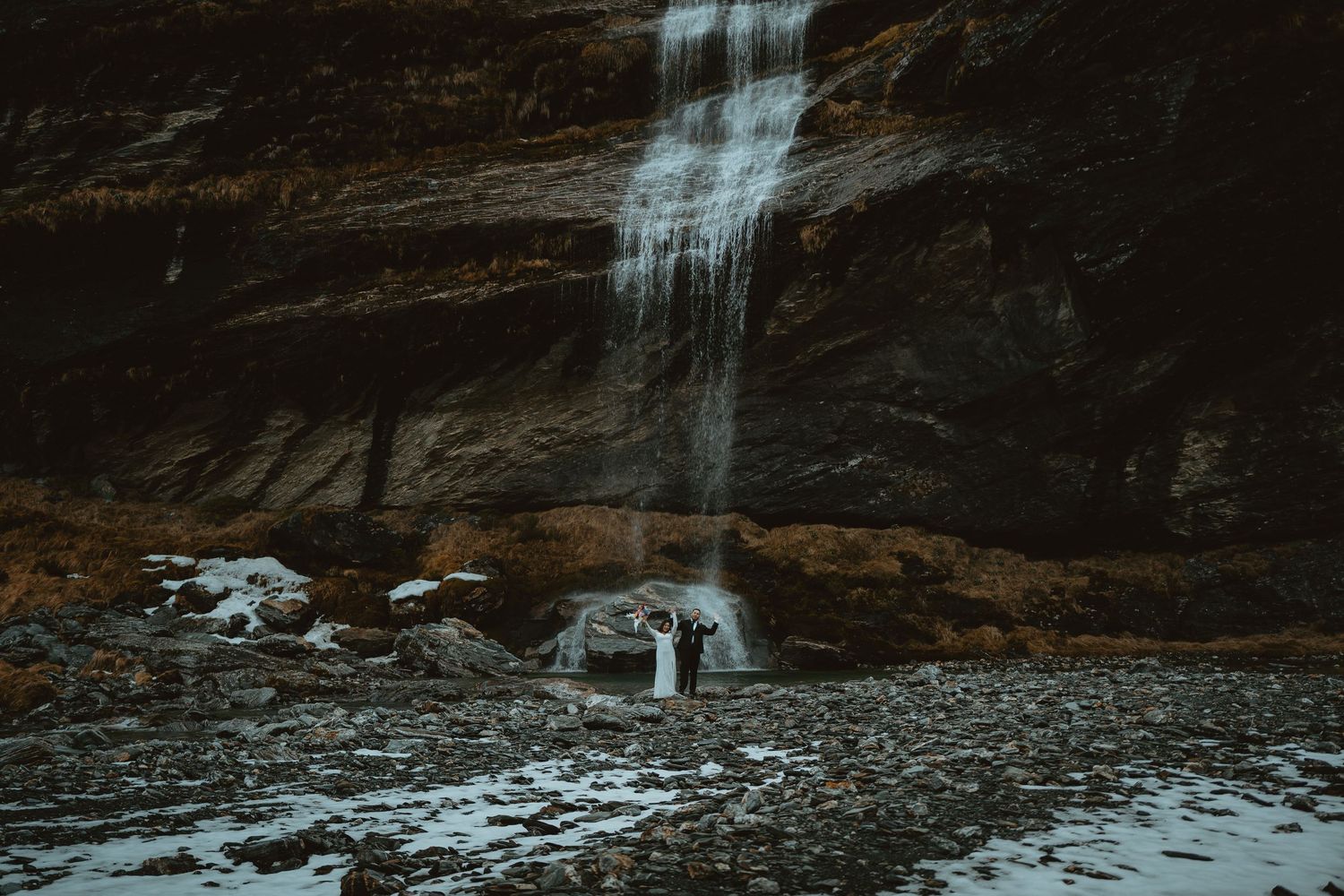
If you've dreamed about getting married in Iceland, explore Iceland. If you want to go to New Zealand, go to New Zealand. There are obviously practical, financial and legal realities involved, but don't reject something you really want before you've even investigated whether it's possible.
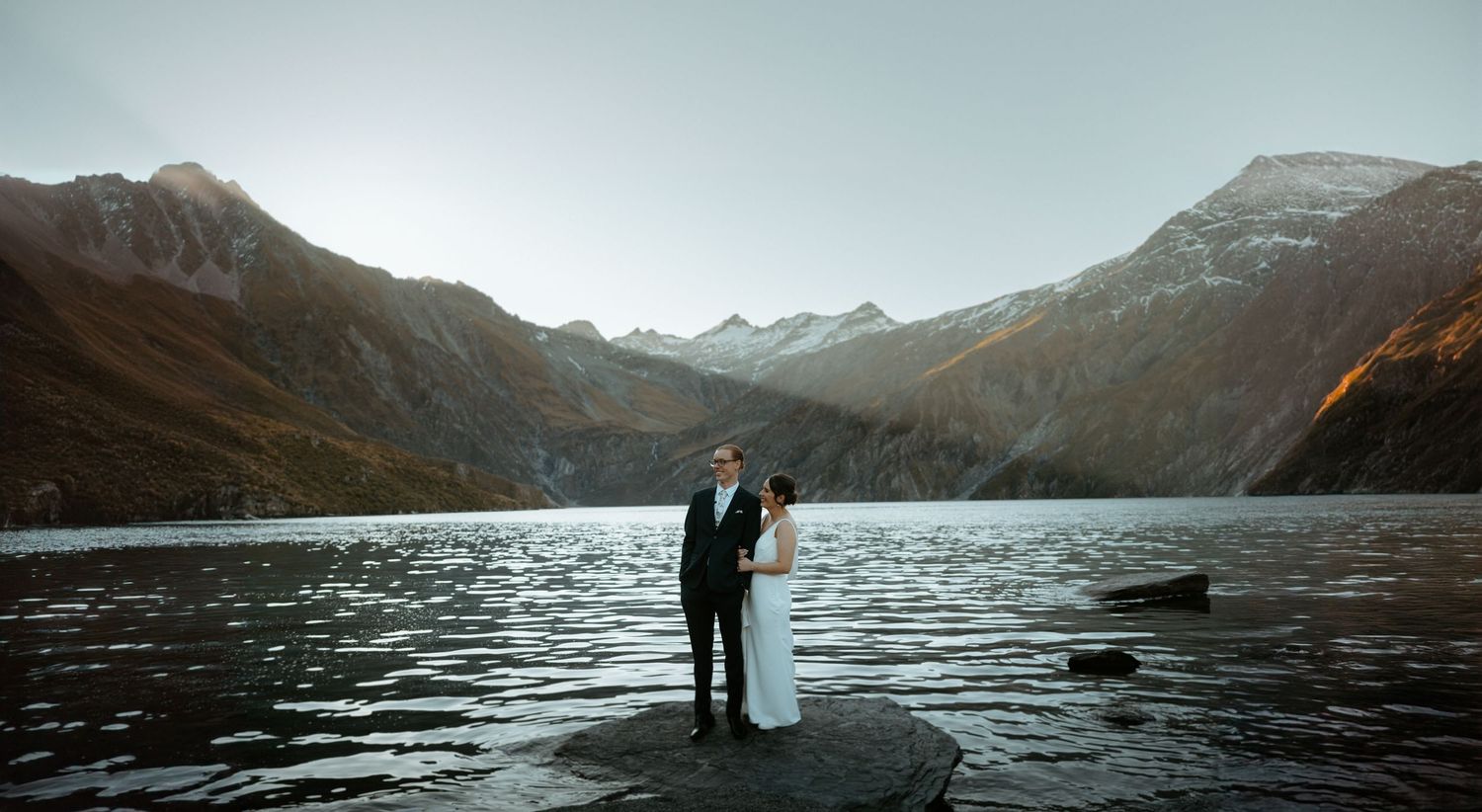
Mercedes and Daniel came all the way from Phoenix, Arizona to elope in New Zealand. They lived somewhere that was always hot and originally considered eloping there, but when we spoke I suggested doing the complete opposite. Come to New Zealand in winter, find some mountains and make the entire thing an adventure. They did.
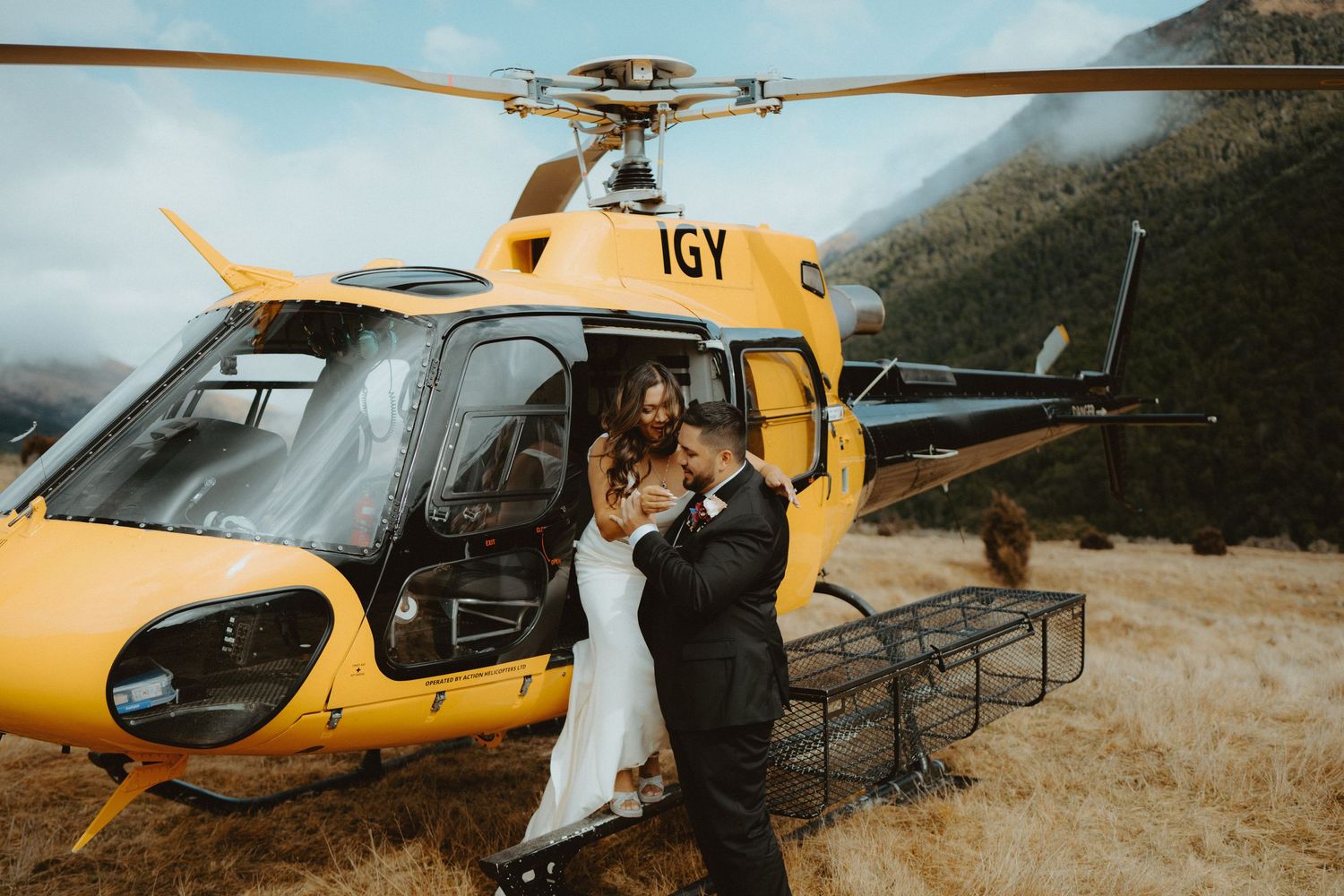
On the morning of their elopement, a storm rolled through and the helicopter company called to say they couldn't fly to our planned location. The next day wasn't an option because Mercedes and Daniel were leaving that part of New Zealand, so we went out anyway knowing I had a Plan B and a Plan C if we couldn't fly.
The weather eventually cleared enough for us to get to two locations, including Earnslaw Burn. We landed surrounded by ice in below-zero temperatures, with rain, snow and semi-frozen waterfalls around us. Even landing the helicopter was interesting because its skids wanted to slide across the ice. They'd travelled halfway around the world from the Arizona heat and ended up standing beside a glacier getting married. That's a pretty good adventure.
I'm based on Australia's east coast, so these days most of my own work is around the east coast of Australia and New Zealand. I'm probably not going to be your photographer in Iceland, but that doesn't mean you shouldn't go. Find somebody brilliant over there and have the adventure you actually want.
You have to remember to eat
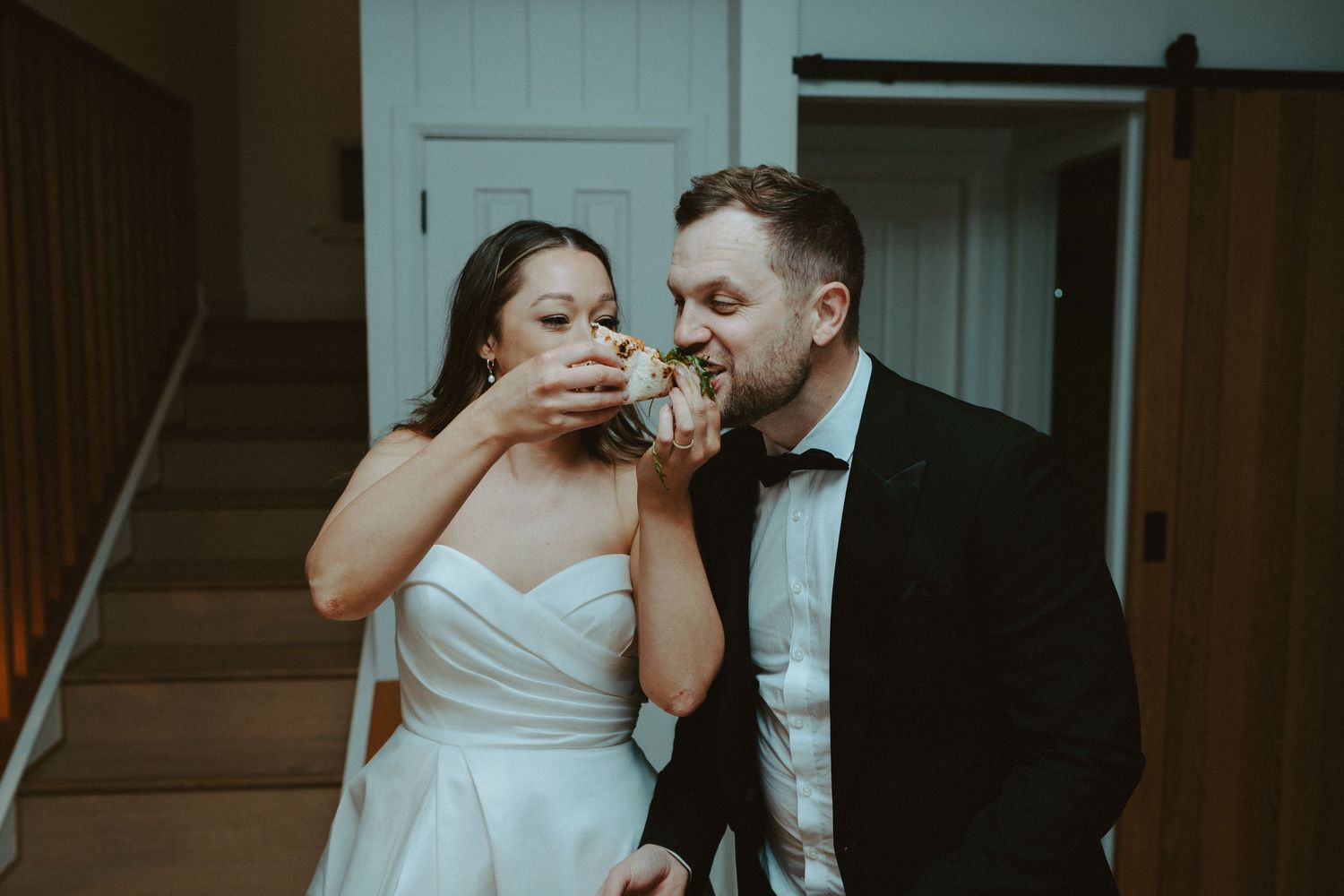
This sounds ridiculously obvious until you're seven hours into your elopement and realise you've been so busy having fun that neither of you has eaten.
At a traditional wedding, food tends to find you. There are venue staff, canapés, meals and usually somebody's mum carrying an emergency supply of snacks. At an elopement, none of that necessarily exists, and these can be surprisingly long and physical days.
Hannah and Kyle are a perfect example. By the time we'd done their morning activities, mini golf, preparation and eventually arrived at their tattoos, we'd been going for nearly seven hours and they hadn't properly eaten. I've got a lot of tattoos, and I was watching them thinking these two desperately need some food.
One of the advantages of an elopement was that I could disappear for a minute, so I went and bought bags of Haribo and came back with them. I've got photos of me putting lollies on Hannah's stomach while she's lying there getting tattooed, and she absolutely demolished them.
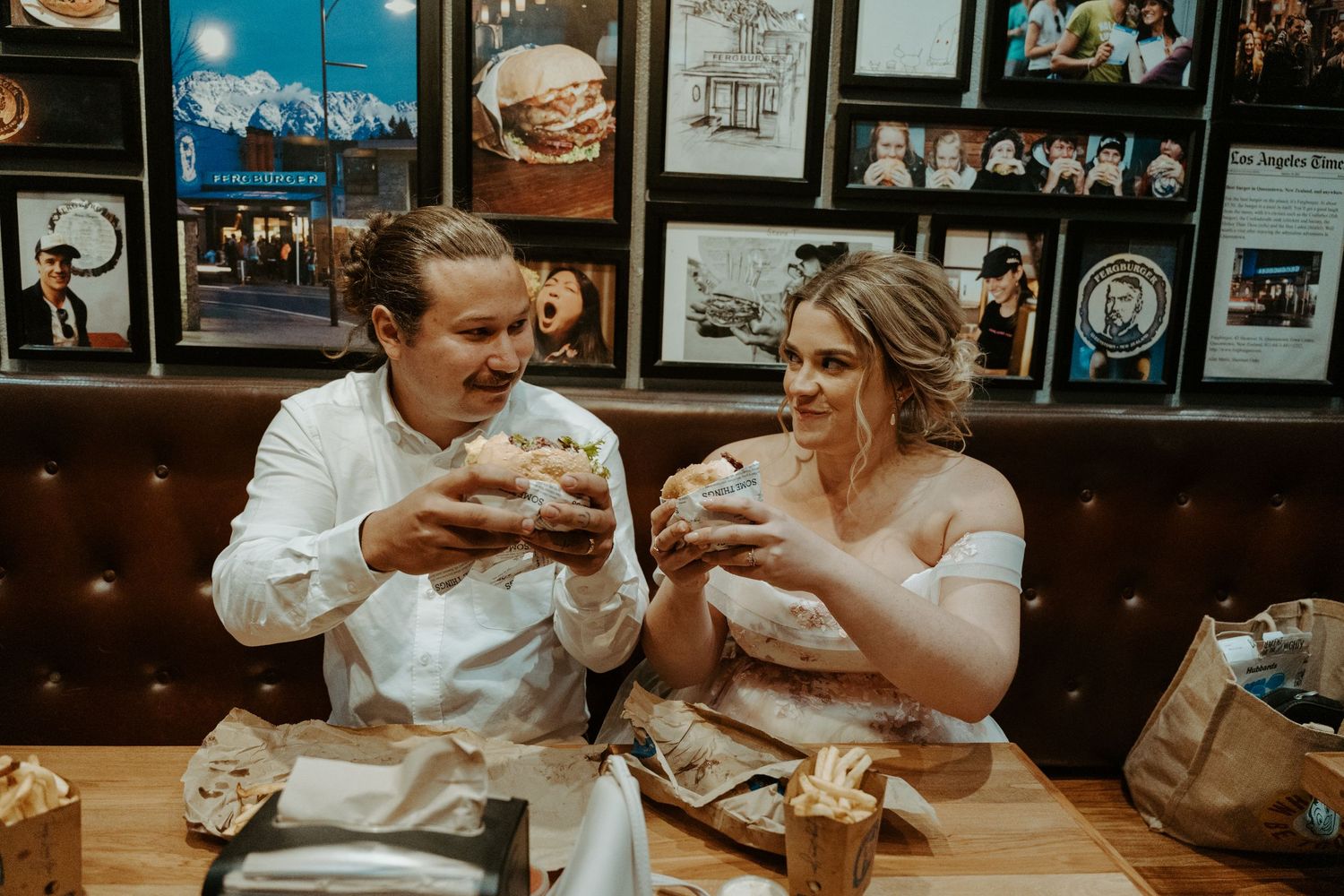
I've also finished an elopement adventure with a couple asking what on earth was still open because they were starving. What they didn't know was that I'd already spoken to Fergburger, so after getting back from Glenorchy they finished their wedding day sitting in their wedding clothes eating burgers and chips. Someone nearby even asked whether this was genuinely their wedding dinner. It absolutely was. Think about breakfast, snacks, water, lunch and dinner when you're building your timeline. Hungry people don't have better adventures.
your photographer should help you plan
Most couples don't have a wedding planner when they elope, which is why I've never thought an elopement photographer's job should begin when the camera comes out of the bag. Need help finding a location? Ask. Not sure which vendors service the area? Ask. Wondering whether the timeline you've imagined is remotely possible? Ask. If bad weather destroys Plan A, hopefully you've hired someone who already knows what Plans B and C look like.
Planning and coordination has always been part of what I offer because there's little value in me turning up and taking beautiful photographs of a day that was unnecessarily stressful to organise. Don't sit awake until 1am opening your 47th Google tab because you don't want to bother your photographer.
The other side of this is making sure you actually know the person you're trusting with that role. Your photographer might spend eight hours with you on a day when there are only a handful of other people around. Please make sure you like them.
If meeting for a coffee is practical, do it. If you live interstate or overseas, have a video call. Hannah and Kyle lived in country NSW, so meeting beforehand wasn't practical, but we jumped on a video call and their baby joined us. We ended up talking about their baby, my daughter and being parents.
Kyle told me he hadn't realised I had children and immediately felt better knowing I was a dad. He'd been worried their baby might cry or need attention and that their photographer could become annoyed. That one conversation removed the concern completely, and when I eventually arrived in another country for their elopement, I didn't feel like a stranger walking through the door. Emails can't really do that.
understand legalities
Elopements can introduce legal questions you might never encounter when planning a conventional wedding close to home. Even something as simple as having a completely private ceremony creates things you need to consider, such as who is going to act as your witnesses.
International elopements can obviously add another layer. Different countries can have different paperwork and requirements, and you need to understand what applies to you before you book flights and build an entire trip around getting legally married somewhere.
This is where I always tell my couples to speak to their celebrant. I've photographed enough weddings and elopements that I've naturally picked up a lot of knowledge about how this stuff works, but I'm not your celebrant and I'm definitely not your lawyer.
Your celebrant deals with marriage requirements every day. Let them tell you exactly what you need to do, particularly if you're planning to get married overseas, and get that conversation happening early rather than assuming something you've read online applies to you.
convenience or freedom, you pick
The original version of this blog had a section called "All-inclusive packages suck." I've mellowed slightly since then.
They have their place. If your genuine attitude towards planning is, "Please take all of these decisions away from me, organise everything and tell me where I need to be," an all-inclusive elopement package might be absolutely perfect for you.
But if one of the reasons you're eloping is because you want to create something uniquely yours, I'd be careful. One of the best things about an elopement is that you get to choose the photographer you connect with, the celebrant you like, the location that means something to you and the handful of other people involved in creating the day.
An all-inclusive package can make everything incredibly easy, but convenience usually involves giving up some control. There's nothing inherently wrong with that. Just make sure you're not trading away the exact freedom that made you want to elope in the first place.
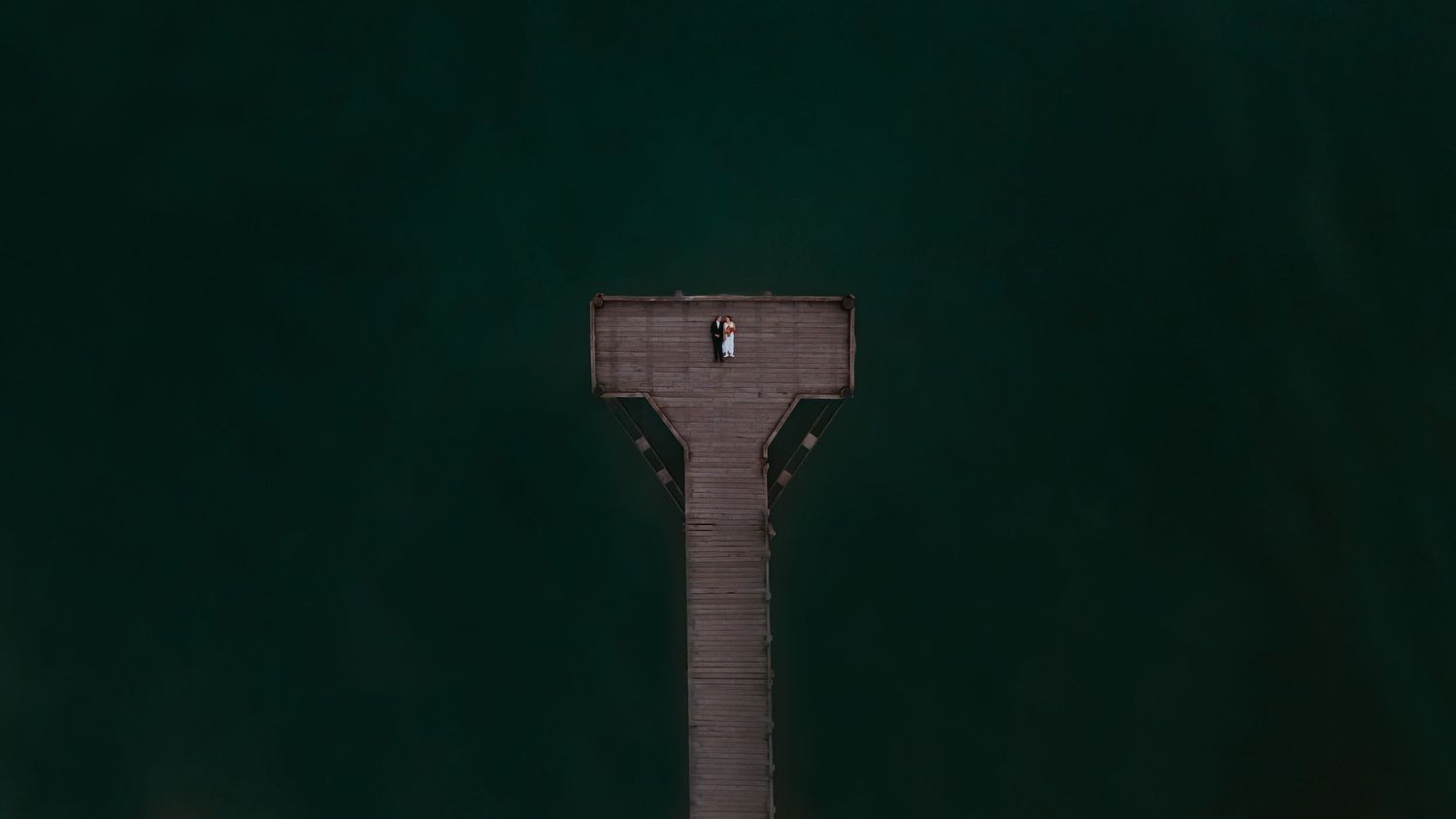
"Eloping is great, but you have to make the right decisions. If you don't, it will be just as stressful, and expensive, as a traditional wedding."
So, should you elope?
If you came to me and said, "We think we want to elope, but we're worried we'll regret not having a proper wedding," I wouldn't immediately try to convince you to elope.
I'd tell you to sit down together and have a very honest conversation about what you would miss if you did. Would you miss having your grandparents there? A packed dance floor? Speeches from your best friends? Getting ready with everyone you love?
Then I'd flip the question around. If you had a traditional wedding, what would you miss about eloping? Would you wish you'd gone to New Zealand, climbed a mountain, said your vows beside a waterfall, spent most of the day alone together or had the freedom to do something that would never fit into a traditional wedding timeline?
I don't think many people want 100% of one and absolutely nothing from the other. Plenty of couples having traditional weddings would love to disappear for three hours and explore waterfalls for their portraits, but they can't because 100 guests are waiting at their reception. Plenty of couples eloping would probably love a huge dance floor with all their friends at midnight.
So don't ask yourselves which option is better. Ask what you would genuinely miss about each one, and then decide which things you're least willing to give up. That's the day you should have.